Not all manufacturing variations carry the same operational risk. To maintain maximum safety, Elins categorises potential busway anomalies into three distinct levels, applying uncompromising AQL thresholds to each: 1. Critical Defects (Target AQL: 0% — Zero Tolerance) Critical defects are flaws that compromise safety or could cause a major system failure in the field. Examples: …

Not all manufacturing variations carry the same operational risk. To maintain maximum safety, Elins categorises potential busway anomalies into three distinct levels, applying uncompromising AQL thresholds to each:
1. Critical Defects (Target AQL: 0% — Zero Tolerance)
Critical defects are flaws that compromise safety or could cause a major system failure in the field.
Examples: Incorrect phase sequencing, structural insulation breakdown, or inadequate clearance/creepage distances.
Our Standard: We maintain a zero-tolerance (0%) policy for critical defects. If a single critical flaw is found during sampling, the entire production run is immediately locked down and re-engineered.
2. Major Defects (Target AQL: 1.0%)
Major defects are functional issues that reduce the performance, longevity, or structural integrity of the busway system but do not cause immediate, catastrophic danger.
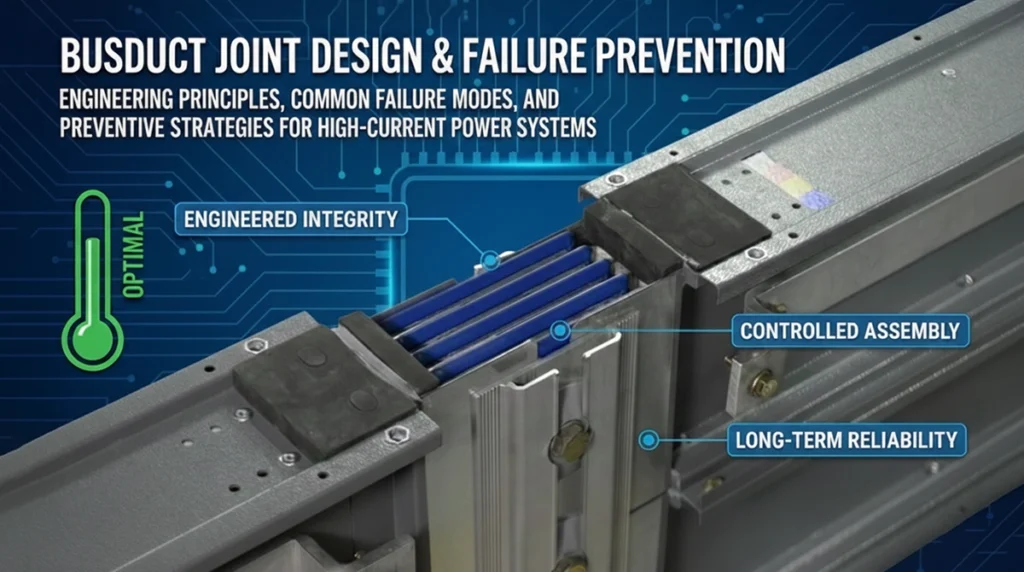
Examples: Deviations in busbar dimensions, inaccurate torque-indicator bolt calibration, or misaligned joint packs.
Our Standard: We enforce a strict 1.0% AQL. For example, in a standard test sample of 50 units, if more than one major defect is found, the entire batch fails inspection.
3. Minor Defects (Target AQL: 4.0%)
Minor defects are aesthetic or non-functional variations that do not affect the electrical or mechanical reliability of the busway.
Examples: Slight cosmetic scratches on the powder coating, faint laser-engraved labelling, or minor gasketing untidiness.
Our Standard: We allow up to a 4.0% AQL for minor issues, ensuring cosmetic perfection without creating unnecessary bottlenecks in production efficiency.
Turning Statistics into Safety: The Testing Protocol
The components selected by our AQL matrix don’t just get a visual scan. They undergo a battery of mandatory physical tests at our state-of-the-art facility to guarantee compliance with IEC 61439 standards:
Dielectric & Insulation Breakdown Testing: High-voltage testing to confirm the integrity of our epoxy/polyester insulation.
Torque Verification: Ensuring the specialized single-bolt joint packs collapse exactly at the designed torque rating for optimal conductivity.
IP Seal Integrity: Testing the Formed-In-Place (FIP) foam gasketing to guarantee IP54/IP55 environmental protection against dust and water ingress.
Why Consulting Engineers Choose Elins
When electrical consultants specify Elins Busways, they aren’t just buying copper, aluminium, and steel—they are buying mathematically verified reliability. Our transparent adherence to ISO 2859-1 AQL standards means that your project’s power backbone is built, tested, and audited to the exact same standards used by global mission-critical industries.